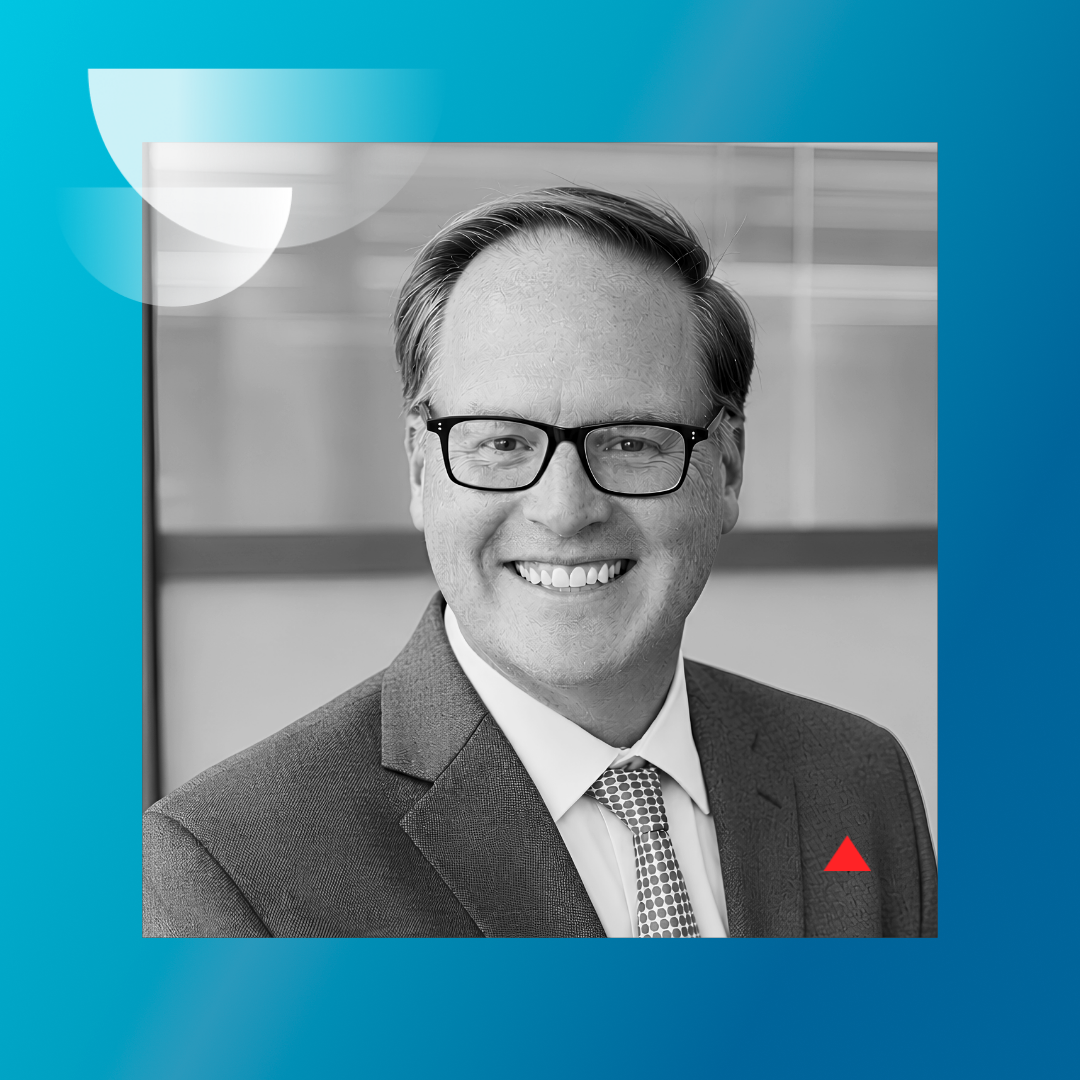
Nick Gerhart:
AI is good at a lot of things, but not really the human piece of it and the empathy piece of it. And so you really want to make sure that those quality controls are in place and you don't want to put someone in what I kind of call the AI purgatory where you're kind of stuck and it becomes like a war of a tradition in terms of the family capitulates and doesn't get the answer they want.
Olivier Lafontaine:
I'm Olivier Lafontaine, and this is Life Accelerated, the podcast for life insurance leaders focused on driving meaningful change through technology, process, and partnership. In this episode, I'm joined by Nick Gerhardt, chief operating officer at Homesteaders Life Company.
Nick has spent about 20 years in insurance, including four years as Iowa's insurance commissioner.
Today, he helps lead a 120-year-old mutual that sells pre-need funeral insurance through thousands of funeral home partners. He believes this is still a people-first business and that technology should help families get served the way they need to. We'll talk about how Homesteaders partners with founders for end-of-life services and technology and why Nick says family should always know when they're talking to AI.
We'll also get his take as a former regulator on who's accountable when AI is part of a claim decision. Let's get started.
So good morning and thank you for joining the show. It's really nice to have you with us. Nick, how are you?
Nick Gerhart:
I'm doing great, thank you.
Olivier Lafontaine:
Excellent. So in our preparation for the meeting and what we like to do on the podcast is to always start with something not related to insurance and not related to AI. So that's always exciting. So what do you do on the weekends?
Nick Gerhart:
Well, I've got four kids, one in college, three at home still. So if I'm not working or thinking about work, I'm usually doing something with the family, playing tennis, going fishing, going to sporting events, the normal things that people in Des Moines do. So yeah.
Olivier Lafontaine:
Good stuff. Lots of outdoors and space to do sports and things, right?
Nick Gerhart:
Right about now, about November through February, not as much outdoors as I'd like, but yes, otherwise, yes.
Olivier Lafontaine:
Is there any ice fishing by any chance in Iowa?
Nick Gerhart:
There is ice fishing. We've got a pond and a lake we go to. That is not for the faint of heart, especially when you get into January, February.
Olivier Lafontaine:
All right, so let's talk a little bit about the company and maybe what your role is, what sort of line of business is, what's the market segment that you're in?
Nick Gerhart:
Yeah, so Homesteaders Life Company, we're 120-year-old mutual insurance company. Been in Des Moines the whole time and we sell pre-need or funeral planning insurance through funeral home partners, agents, and then we have e-funeral platform, which would be allowing folks to do it direct. And we'll do about roughly $700 million in total production this year, have about four and a half billion dollars on the balance sheet. We'll issue a little over a hundred thousand policies in a year and probably pay about 70,000 claims. So a lot of transactions come into this office and out of the office, about 400 employees across the United States.
Olivier Lafontaine:
Good. And you personally, maybe tell us a little bit about how did you end up as... I think you're the chief operating officer at Homesteaders. Correct. So what led you to that and where did you start in insurance?
Nick Gerhart:
I always say with insurance, you either are born into it or stumble into it, and I was one of the people that stumbled into insurance about 20 years ago. Grew up in life and annuity retirement, did four years as the insurance commissioner here in the state of Iowa under Governor Branstad, the longest serving governor in the United States history. After that, I went to Farm Bureau Financial, which it was a property casualty multi-line life insurance company as well. And then when I left there, I knew these folks pretty well from my commissioner days and I looked at what they were looking to build and transform the company and it sounded like a good fit for where I was at in my career and where this company was at in its own trajectory. So kind of like a perfect little marriage, if you would, in terms of my previous skill set and the ability to help a company transform and grow and just made a lot of sense.
Olivier Lafontaine:
If we jump right into things, I feel when we talked in preparation for the discussion, I thought you had a very interesting model in partnering with founders for technology and platforms and partnerships with, I guess partnerships with founders in order to expand what the company does. So can you explain that a little bit and how do you work this out?
Nick Gerhart:
Yeah, so we look at everything a little uniquely. We like to look at what we do. Our core business is that funeral planning business and then how can we do things before a funeral happens, like retirement, estate planning, and how can we help somebody afterwards more like grief support or estate settlement? And obviously we're really good at what we do and we like to partner with founders that are good at what they do. And sometimes that's either opening up our distribution model or other times it's partnering with them on a capital basis. So oftentimes we'll help them with a capital raise. Sometimes we'll be their primary or only investor. Sometimes we'll be a smaller minority strategic investor. We really like to cut deals where the founder's highly incentivized to grow their business and let us kind of ride along for the strategic benefits. But one of the things we're really good at is finding a good founder and letting him or her do what they're good at, which is build a business and then be a patient capital provider.
We're not looking for quick hits. We like to see what we kind of call greed shoots or leading opportunities. And once we see that, we're usually willing to commit more capital, but we really like to have the owners still have their own skin to the game. And so we take a dual approach, if you would, in terms of capital support, but also distribution support, business support. We've probably done, I don't know, anywhere from 15 to 20 different smaller to larger investments. Like I said, sometimes we'll be the only capital provider, but we're not opposed to just being a smaller one as well and helping that founder grow his or her business.
Olivier Lafontaine:
And is that typically in a funeral home business or a technology software platform business or all of these answers or what would typically these new businesses?
Nick Gerhart:
All of the above. I mean, typically we'd want to make some adjacency sense if you would want to be adjacent to what we do, but sometimes it'll be just an interesting investment that we think is going to be good for the entire insurance industry. Sometimes it's more focused on end of life planning. I would say most of them are really the end of life or how do we help a family or consumer navigate loss or how do we help them plan for a loss or plan for the end? So really we're not single-minded if you would, but we really like to have it be adjacent to what we do. And at the end, we really want to offer value to our funeral home partners in terms of helping them grow their brand and their business as well.
Olivier Lafontaine:
How many partners or funeral homes do you work with? I think it's a big number, right? It's a distribution network.
Nick Gerhart:
About 3000. There's roughly 20,000 funeral homes, rooftops, if you would, in the United States, and we work with about 3000 of them. Some of them are groups of funeral homes, if you would. Think of a firm that might on anywhere from five to 300, but typically we have a lot of what we call mom and pops, smaller single towns all the way up to a company like Parklawn, which owns roughly almost 300 in North America. So really we're open for business for anybody if you would, but our sweet spot is still the independent market.
Olivier Lafontaine:
I'm assuming they don't have a lot of technology expertise in those smaller shops, so do you provide the tooling, the technology platform to work with you guys? Obviously there's client onboarding and things like that that needs to happen. So you're typically, I assume, providing that, right?
Nick Gerhart:
We offer a lot of different services. Some of them could be onboarding, some could be supporting before, some could be during, some could be after. But you're right, a lot of the smaller shops, they don't have a large budget for technology spend. Now I will say with AI and what's happening, it's been easier for even a single rooftop to develop their own tools, but we make them kind of open for anybody if you would. And so it's really what fits for their market and their brand and how can we help support them. But yeah, you're right. A lot of them, they're very busy in their day jobs. They got to take care of a family at the moment. If you're thinking about your typical funeral home operator, they don't really have a lot of time to invest in these tools and they are quite expensive at times.
So we like to invest in tools for the entire profession. Yes.
Olivier Lafontaine:
And how's the process? Is it digital most of the time? Is there still a lot of... I have to assume that this is a process that happens face-to-face, that a person goes to the funeral home and is shopping for end of life arrangements, and then I'm assuming there's a face-to-face process in most circumstances. Is there any online stuff happening or digital tool or is it very much paper or what does the process look like?
Nick Gerhart:
Well, if you've been in one funeral, you've probably been in one funeral home. So some are very paper-based, some are very digitally inclined. And my view of the world is consumers are going to start online. So how can we help that funeral home find the families they want to serve online, bring them into their funeral if that's what the family wants? If they want to do it digitally, fine. But most people, to your point, want to still talk to somebody and how do we help them find the families, serve the families, bring them into that funeral home's ecosystem if you would. But yes, a lot of firms still use paper. Some still fax in apps and all that. In our business, we're working in someone else's business, so we really want to be accommodating how they want to do business, if you would. But you are seeing more and more of a shift towards online premises, if you would, in terms of what's your Google reviews, how are you seeing digitally has become more important, I would think, and most funeral homes see that trend as well.
How do we really help them find those families, serve those families the way the family wants to be served? A lot of folks still want to talk to somebody, go in and see the merchandise if you would, do the plan in person, and that's totally fine and understandable. So it's really how does the family want to be served and how does the funeral home want to serve their families? We can really accommodate anybody.
Olivier Lafontaine:
If we shift a little bit to the back office on your side, I mean, have you done some modernization? What's your view on legacy systems? Are you still running legacy systems and they're running fine? Are you looking to transform? What's the current thought process?
Nick Gerhart:
That's the age old issue, and I would say the insurance industry as a whole has the best technology. The problem is a lot of it was built in 1990 or maybe even earlier sometimes, but the system works and does what it needs to do, that's fine. So we really look at are there strategy and tools we can bolt on and add the experience side of it, pay claims more quickly the way the funeral wants to be paid, the way the family wants to be served, how do we help the family on the onboarding process? And then on the back office, it's really about, okay, where can we drive efficiencies both on onboarding a family, onboarding a new agent or a funeral partner? How do we pay the claim faster, quicker? Because in our business, if we can't pay that claim pretty fast and quick, then we're not going to be in business.
You buy our product so that your funeral is paid for and paid for quickly so the families not only knows what you wanted as the deceased person, but the funeral home gets paid too. So it's really looking for those efficiencies inside to drive that value and better, quicker, more response time on calls, better, quicker payment of claims. And so we're always looking to drive value there, not getting rid of folks because I don't think that's where our business is going because it's still a people first business, but how do we empower our team so they're able to meet the demands of the families and the funeral partners we have in the way that everybody wants to be served?
Olivier Lafontaine:
I assume there's not a whole lot of product innovation in itself. The product must be fairly stable in itself. You pay for the funerals, but it's the distribution service that you provide, and that's what you're saying perhaps is you bolt on these experiences to support the claims and servicing process.
Nick Gerhart:
You're right. It's a whole life product, if you would, not a lot of innovation on product. You get a dollar in, you got to credit a certain amount and very like any other life product sensitive to interest rates in terms of what you can offer of growth and everything like that and compensation to a producer. So a lot of that is pretty commoditized. So it's how do you make the experience better for your partners out in the field so they can do more business and then more importantly, have the family served the way the family deserves and should be served.
Olivier Lafontaine:
With everything happening with generative AI, have you started to look into some of that? Do you guys have a position or some experiments that you're looking at or perhaps this is an area that's a little sensitive for robots to be answering? So how do you see this?
Nick Gerhart:
It's interesting. I think you're going to see more and more pilots and proof of concepts going around that. I still strongly believe that people want to be served by other people or if you're going to infuse this, certainly consumer facing, the family has the right and should know that they're talking to an AI agent and not a human person. We're very sensitive to that, but at the same time, a lot of our platforms are communication based, like text messages and all that. And so we would make it very clear that you are talking to somebody or not because I think that's important. And for the most part, we are agnostic in terms of how that happens, but we want to make sure the family knows that you are talking to an AI agent if that's what's happening. Now, I see a lot of interesting things happening more, I would say, top of funnel in terms of consumer journeys, if you would.
How do you take someone down a coaching journey? But again, I think it's important that they know who they're talking to, whether that's a person or not, but we are doing more and more around that top of funnel. How do we capture the family, get them interested in what we do, take them down a curated journey? AI is really good at those rudimentary follow-up things and making sure an agent stays on top of a prospect or an account. And as we develop more and more of this capacity and tools, we're going to do more tests and all that. But from our perspective, it's really codependent on what the funeral operator wants for their families. And so we're not just going to release AI into the ecosystem without really testing it, making sure that it's doing what it needs to do. There's always some quality controls as well because again, you're dealing with a family at a pretty pivotal moment in their life and you have to have empathy, you have to be able to do it the right way.
In my experience, AI is good at a lot of things, but not really the human piece of it and the empathy piece of it. And so you really want to make sure that those quality controls are in place and you don't want to put someone in what I call the AI purgatory where you're kind of stuck and it becomes like a war of attrition in terms of the family capitulates and doesn't get the answer they want. We've all done that, I'm sure, whether it's through airlines or banking and that kind of thing. And so if you want to talk to a person, you need to be able to talk to a person. So in my mind, it comes down to transparency of who's behind the communication, and there always has to be that opportunity to talk to someone if that's what the family wants.
Olivier Lafontaine:
Yeah, absolutely. And probably maybe the use is going to be more around the servicing or the administrative work working on the funeral home, but probably less with the family themselves, I would assume. If I asked you with your past as insurance commissioner, how do you think that the states are thinking about or how do they see this? Are there regulations that are getting prepared? I know I'm preparing something for a presentation in a couple of weeks and it looks like there's a number of things happening, but what do you think is the role of the regulator or are you aware of anything happening?
Nick Gerhart:
When I was commissioner, I'd always say we don't want to get out ahead of the innovators because then you're going to stop it all, but you got to be able to see the taillights. So you have to be able to be close enough to know what's happening, that the families are getting the bargain that they wanted, that there's no mischievousness happening in terms of pricing of products. Now in our world, it's pretty much a guaranteed issued product, so we don't have some of the same issues of table rating somebody or in the home auto market using data in a different way. So from our perspective, it's really about how do we serve that family? From the regulator's perspective, it's really about making sure that nothing unfair is happening to that family, whether it's on pricing, underwriting, claims adjudication, that kind of thing. So I think the regulators are getting their arms around how are these tools really being adopted and used?
What are the data sources? And at the end of the day, they're going to hold the carrier liable. You can't just say, "Hey, the AI ate my homework and made that decision." It's like, "Well, no, the carrier made that choice and that decision." So if you're going to stand behind that, you got to have controls in place to say, "Well, the reason it happened is X." And you have to be able to still stand behind that decision. If you denied somebody a claim, you better have your ducks in a row on why that happened. And if you didn't onboard somebody or you table rate them a certain way, you got to be able to explain that. And like I always say, you have to have at least somebody in the home office understands what's happening for that family and the decisions being made because this is a pretty important thing you're offering.
If you're going to deny someone coverage, you got to be able to explain why. If you're going to deny a claim, you better have your ducks in a row. Nothing really has changed in my mind in terms of those decisions. It might be amplified. So if you build models that are more discriminatory, if you would, you better be able to explain why that's happening in this kind of risk selection, if you would. The tool only amplifies the good things, but it could really amplify the bad things if you would. And so regulators are really getting their arms around data sources, decision making, certainly it comes into underwriting, claims adjudication, which is really what the regulators I think care the most about is making sure that there's no unfair trade practices happening in that market.
Olivier Lafontaine:
And maybe claims adjudication is where there's maybe going to be a bit more scrutiny. We'll have to see that, where if you start having some decisions or even reading of documents through AI, that can open the door to if there's an error in there, who's responsible for the error, who takes ownership of that, then how do you demonstrate that you're being fair, I assume? So those are perhaps the areas where we're going to see in the future, right?
Nick Gerhart:
Correct. And I think that's the most important thing because you still got to be able to stand behind those decisions. You're still going to have actuaries obviously, but you better be able to understand how the product was priced and offered, et cetera. And when it comes down to, again, denying a claim, which is probably the most important thing that a carrier would ever do, why'd you deny that claim? It can't just be AI told me I should deny this claim. It's got to be back to insurer's principles and basics in terms of, hey, there really was fraud in the underwriter. There really was fraud in the claim. And the models can be very useful. I always say all models are useful, some are wrong, and so you got to be making sure that it fits into your workflow the right way.
Olivier Lafontaine:
Good stuff. So if we go back to, let's say, the market, the pre-need market, I suppose, what do you feel is the most important things for those funeral homes and growing the business or at least being successful, improving service? What are people talking about? What's top of mind for these companies and what are they trying to do to improve the service they offer?
Nick Gerhart:
I think the first thing they're trying to do is make sure they don't screw up their brand because in the funeral market, nothing's more important than the brand and the service you offer. And how can we amplify that brand, whether it's through some though leadership, content, et cetera, put out a social media presence, if you would. Again, Google reviews, because again, if you haven't pre-planned a funeral, which only about seven to 10% of people in America actually fully pre-plan a funeral, that means there's 90% of people as they go through this journey, and there's about 3.2 million deaths in this country every year, that there's a lot of people that didn't really plan everything. So how do you actually serve that family? And then how do you capture that family? And a lot of people are still going to start online, whether you're buying a car or a dishwasher or even probably a funeral, you're going to go online first to figure out the value of that brand.
And yes, people are price sensitive, but at the end of the day, it's like what's the value that that funeral home operator is offering in that market? Anything I do, whether I go look at a restaurant or I go to Yelp, if I go... Well, same thing here. I think people are still going to say, "Well, does that funeral home have a good brand online?" So helping that funeral home not only have the good on the ground, if you would, reputation, but the digital one as well.
Olivier Lafontaine:
And as you mentioned earlier, the digital reputation probably makes a bigger and bigger impact, I suppose, because that's the main thing you want. You want them to be around and to do the things that they said they would do when you're no longer around and your family needs it.
Nick Gerhart:
Yeah. I mean, if you think about it, if a firm has only negative Google reviews, that's not a good thing. And so how do we help them amplify the good work they're doing throughout their community? And so again, a lot of word of mouth still in this profession, this business, but it is still going to be a digital first world for a lot of consumers.
Olivier Lafontaine:
Looking forward, where do you think this market is going to go, let's say in five years with everything happening and the technology and other things, where do you see the biggest changes let's say in the next five years?
Nick Gerhart:
For the way I look at the world, I think the at need, if you would, from notice of a death to taking care of the family, that two or three-day window's not going to probably change a whole lot. How they would capture the families before that could change a lot in terms of maybe someone starts to think about this during an estate planning journey, if you would. So getting this in a more relevant spot to where the consumers are, because in my mind, what we do really is kind of the final piece of an estate plan. And you might have done the wills and done the trust, but really you should plan this for your family as well. We kind of say it's your last good thing you could do for your family. So how do we help the families think of it more like an estate planning tool?
And can we do that through a digital presence and then bring them into a funeral home to actually do that plan? If they want to do it digitally, help them find a funeral home that's in their market, that kind of thing. But I do think the biggest change, if I see one, is probably going to be more on the customer and family acquisition on a pre-need side. At the at any point, especially if it's something that happened that wasn't expected, that's kind of a free for all still, and that might not change a whole lot. And maybe you go to the same funeral home your great-grandmother went to if you're embedded in the community, but here in this country we're very dispersed, if you would, and kids might be in Dallas and mom and dad might be sitting in Bismarck, North Dakota. And so how do you help that family that's in Dallas planning for the decedent in North Dakota?
And can we start it on a digital process so they can start to take care of the family that way? I think you'll see more and more aftercare, if you would. How do you help the family with grief support or maybe some estate settlement and even the wealth transfer? There's a lot of money emotional for the next 20, 30 years. And can we help that family, whether it's maybe they inherit an IRA, maybe they inherited a house, how can we help that family take care of the things that need to be done? Because if you've ever gone through this, there's about 50 things you got to do in the first few months, and most families don't know that. So how do we educate the family on here's what's going to happen now that the casseroles have stopped and the grief has started settling, how do we help that family do more than what a traditional model would've done?
So really, I hate the word omnichannel, but it really is sort of that how do we help the family the way they want to be helped? And oftentimes you go through this and you don't understand what has to happen. And so educating the family on, hey, this is what's going to happen. You got to get the death certificates. You got to start thinking about estate settlement. If it's a surviving spouse, that's a different journey, if you would, than if it's the next generation taking over these assets. And so being more of an education resource and an empowerment platform, we like to think of ourselves as a care and bereavement platform. So how do we help that family in a caring way, but take care of the things that need to be done before, during, and after?
Olivier Lafontaine:
That's interesting because finance is almost like a post-deceased financial planning step and there's lots of things that happen differently after that. So it's really interesting to hear it that way.
Nick Gerhart:
And again, I've been through this unfortunately a few times in the last few years and every journey is different. And a lot of people think, "Well, I don't have an estate. I don't need an estate plan." Well, if you own a house and you have some assets, you have an estate, you know what I mean? And your typical house in this country could be worth three, four, $500,000. It's not even a million depending on what part of the country you live in. So you do have an estate and things have to happen. For instance, you could inherit a house and if you don't know you're supposed to get a date of death appraisal on that house, you could have an issue with your step up and basis, but families don't really know that that's part of the journey they need to be thinking about. And so how do we help educate and empower them through this process?
Because again, like I said, once the casserole stop and the grief settles in, you have a bunch of things that somebody has to do and it's a pretty horrible process. You know what I mean? So how do we help that family do more than just the good work that's happening in that three-day window, but how do we help them beyond that?
Olivier Lafontaine:
Yeah, that makes sense. Something we don't talk about very often, but that was very interesting. Well, thanks a lot, Nick, for all the good conversations and your time today. Really appreciate it.
Nick Gerhart:
Yeah, no, it's great to be with y'all. Thank you.
Olivier Lafontaine:
Nick brings a perspective that's hard to find because he sat on both sides of the table as a regulator and as an operator. His message on AI is simple. Be open with families when they're talking to it and make sure they can always reach a real person. What stood out most was his point about what happens after the funeral. Once the casseroles stop and the grief settles in, families face a long list of tasks most of them don't really see coming from estate settlement to inherited assets. Nick sees a big opportunity for carers to help with that part of the journey, not only the few days around the service. As more families start online and more wealth changes hands, the carers who stand out won't be the ones with the most tools. They'll be the ones who stay with families long enough after the claim is made.
Thank you for listening.