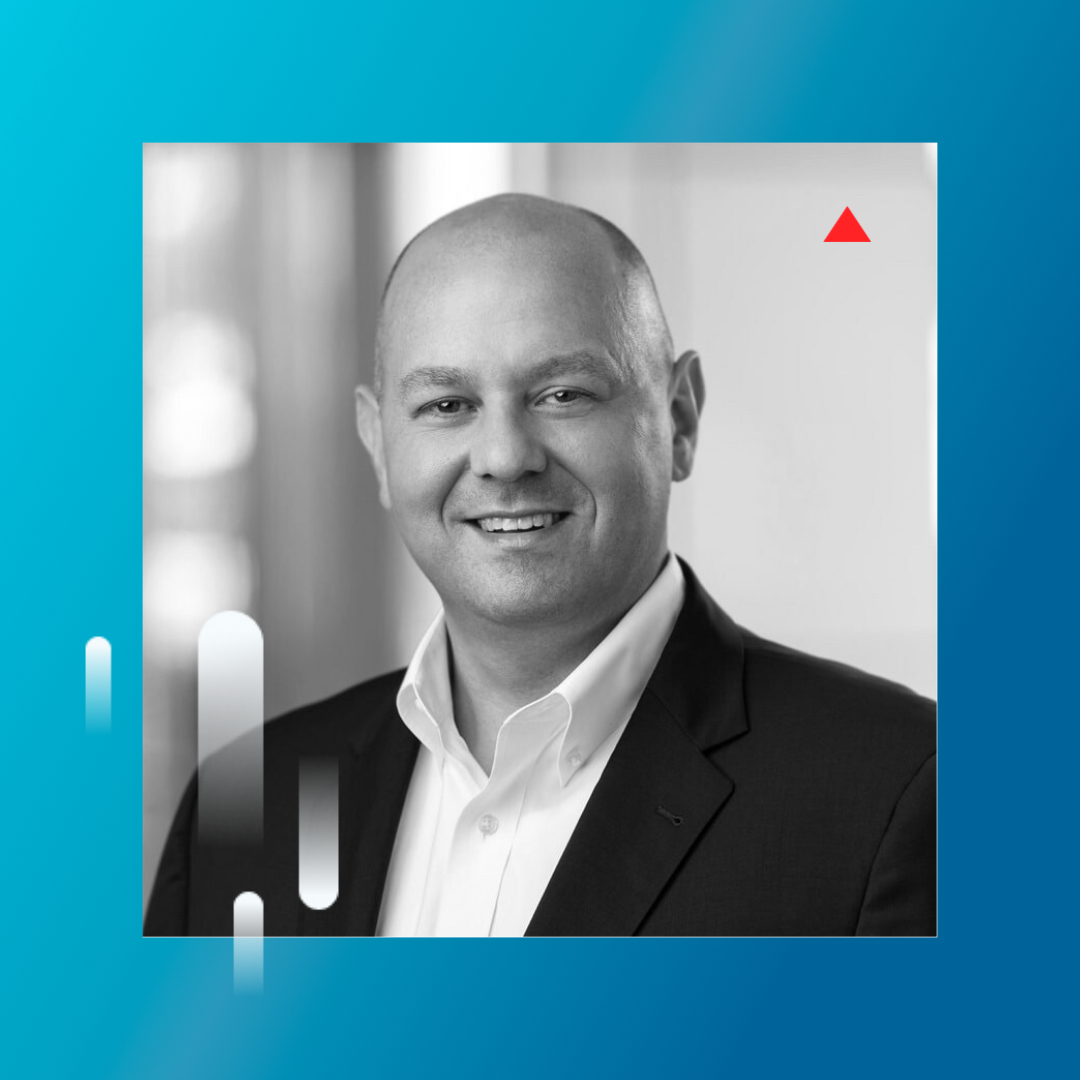
David Ditillo:
Listen, as a society, there are mega trends that come about every decade or so and they fundamentally change the playing field. And AI is a mega trend that has come of age, and I say come of age because the insurance sector and certainly Corbridge has had aspects of AI depending on how you define it for quite a period of time. When we think about advanced practices like machine learning to automate capabilities like underwriting or provide enhanced pricing or decision support.
Olivier Lafontaine:
I'm Olivier Lafontaine and this is Life Accelerated, the podcast for life insurance leaders focused on driving meaningful change through technology, process and partnership. Today I'm joined by David Ditillo, chief Information Officer at Corebridge Financial. Over the course of his career, David has been at the center of some of the insurance industry's most ambitious technology transformations. In this episode, he takes us behind the scenes of Corebridges’, spinoff from AIG and the sweeping changes that followed. We look at modernizing at scale, migrating over 800 applications to the cloud, exiting legacy infrastructure, and rethinking the company's core systems all while keeping the business growing and the customer experience intact. Let's get into it. Dave, thanks for joining me on the show, as we usually do on this podcast. It's good to hear a little bit about personal stories and something unrelated to insurance or unrelated to work actually, and I did hear in our preparation that you are a mountain biker and an avid pizza maker, so maybe you want to talk about that to get going.
David Ditillo:
Yeah. Well first thank you for having me. I'm excited to join the podcast today. And so my background, apart from my passion with technology I think stems a bit from my roots. I grew up in Brooklyn. I love mountain biking in the city, which is as dangerous as mountain biking in the hills of North Carolina where I live today. And during COVID I decided to explore some passions and took up pizza making and had a pizza oven built in my house here. And each year I pick a topic of interest. So one year was quantum, one was pizza baking, and the latest topic is now becoming a beekeeper
Olivier Lafontaine:
Beekeeper. So what does that mean exactly?
David Ditillo:
It means that I am the proud parent to 40,000 bees. I have two beehives that I started this year and I learned very quickly that bees are fascinating. I went to bee school for several months and I am waiting till next season, so hopefully I get to taste upwards of 40 pounds of honey that each hives will make a year and share it with my colleagues and friends. But the bee population in general is core to the food chain and bees have struggled a bit, so giving back to the ecosystem is a passion of mine both in technology and in nature.
Olivier Lafontaine:
Fascinating and really interesting. Tell me more about your background. I think you're a software engineer by trade perhaps. And tell me how you got into this role that you have today and what's your background?
David Ditillo:
It all starts probably, oh geez, 43 years ago when my parents brought my brother a Commodore 64 for those that used to program from Toys R Us and that started the passion in writing software. I was hooked at a very young age. I'm a software engineer by trade. I went to school for software programming and I started in corporate America. Geez, when I was 18, literally right out of high school I was fortunate enough to work for JP Morgan in banking for a while. I spent 20 wonderful years working at MetLife and the insurance sector and I joined a AIG back in 2020 as the CIO of what was then their life and retirement division. I've had a really tremendous career in terms of both the radical change that has happened in technology over the last 25 years, but also being part of some very large companies doing some fascinating things using technology to rebuild each of those industries.
Olivier Lafontaine:
That's great. And I guess you're now CIO of Corebridge after the spinoff, is that correct?
David Ditillo:
I am. We spun out of AIG back in 2022, and so we are relatively young, a new public company that has a very large and prominent role in the industry. We're one of the largest providers of retirement solutions and insurance products in the nation. We have multiple lines of business supporting both the retail channel folks who are managing their wealth through distributors and partners like the large banks and wealth management firms. We provide retirement services in the group retirement space, so think about teachers and public school systems, and we also offer life insurance and pension products as well.
Olivier Lafontaine:
You told me before when we prepared, you did lots of transformation projects at high speed or what I would say maybe that's the startup aspect of it, is that right after the spinoff? Tell me a bit about what you guys have done in terms of digital transformation or in general IT transformation projects.
David Ditillo:
Yeah, so I think I spent my entire career doing transformational type projects with emerging tech specifically in the digital arena. Life for as a division of a IG was very progressive from the early days of adopting technology to enable us both in terms of how we underwrite and provide retirement services advice to our customers. And that carried through as part of separation when I think about the digital journey. And so digital transformation oftentimes doesn't necessarily happen in the context of a separation event or a M&A type activity. For us, it was a huge tailwind in terms of looking at how do we really rebuild the digital core of the company. Separations are tough. They tend to be complicated as you think about standing up a new public company and all of the systems and teams required to support the company operating as an independent entity.
As I look at the two short years during and post-separation, boy, we accomplished a ton as a firm. We established our new infrastructure. We migrated almost 850 applications to the cloud. We exited two data centers. We built a new technology organization that included both our cyber infrastructure and enterprise teams. We established over 200 new applications as we stood up new enterprise capabilities for the firm and we grew the business at record levels. And so when I think about digital transformation, for me it's about establishing the bones of the company in a way that we're not only separating the systems and capabilities from AIG at the time, but establishing the footprint to enable us to really start to move quicker and embrace emerging tech like artificial intelligence and doing so in a way that is underpinned by security and protecting our customers and our customer data. And so transformation comes in many fashions. I think oftentimes folks talk about the technology you see and feel and touch the digital capabilities, but during the separation event, a lot of it was establishing the foundation of the company. As we think about hyper digitizing over the next five years as a new separate standalone company
Olivier Lafontaine:
That gives you a unique opportunity to think through, maybe go back to the basics and think through a bit more, I guess, about everything that you can do versus when you're in a hundred year old company as opposed, it's more difficult to see how you would reorganize everything and how you would change all of your systems. Is that something you've noticed? Was that the opportunity I suppose, where just the fact that there's an opportunity to rethink everything from the ground up to how technology supports the business?
David Ditillo:
Yeah, I listen, a dream of every CIO is to start with a greenfield business where you don't have the legacy technologies to contend with. I think what's interesting about the insurance sector similar to other sectors in the financial services broader industry, is the fact that the products and commitments we make to our customers are not short-term commitments. They are promises for many, many years, which means that the systems need to endure time and that's great in terms of providing capabilities to long-term products to our customers that they can rely on. But from a technology standpoint, it means that the footprint and the data and the systems that we create need to be around for 20, 30, 40 years. And so where I would have loved to start with a blank sheet of paper, our journey really started with the footprint of technologies that underpinned the life and retirement organization as part of AIG.
But it allowed us to really take a step back and look at what happened in the insurance industry over the last 10 or 15 years, learn from what others have done and innovate around how we did separation. And that might not sound jazzy or exciting, but I think for us it was because it gave us an opportunity to really look at the bones of the company, both our enterprise systems and our capabilities that really manage the insurance business itself. So think about our ledger, our investment platforms, our risk platforms, our actuarial systems, but to come back around then and think about how do we re-platform our systems in a way that positions us to be a cloud first provider. As we think about the pace at which technology around the insurance sector has changed and to set a foundation that allows us to permeate these new contemporary technologies into the fundamental core of the company, not many companies get the opportunity to go back in time and rebuild the foundation. You're really building the capabilities on top. We had an opportunity to bring forward the capabilities from the past and start to modernize the journey around the core of the company while we were anticipating the capabilities that were coming. As we think about the emerging trends that we're seeing around AI and data and the customer experience.
Olivier Lafontaine:
Did you migrate policy administration system as part of that or re-platformed policy admin or did you consider doing that a reflection around, I have to imagine there was some legacy policy admin systems, but probably more than one as part of that. So how did you approach that?
David Ditillo:
Everybody loves policy admin systems in the insurance industry. They tend to be the most complex aspect of the systems I think we support. So yes, we did have to re-platform policy admin systems. The good news is we did not have to take on conversion of policy admin systems. And for those that have implemented policy admin platforms, replatforming is one thing, changing the core of the tech that the systems are hosted on and supported by, but not having to touch the underlying systems themselves in terms of the rules or the data or convert and consolidate was something that we were blessed with not having to do for this separation, which I think was a good thing because it allowed us the focus again on the core foundation, build the enterprise systems, but allow the business to grow at scale along with the separation activities that we were undertaking as we were enhancing and launching new products in market at the same time.
Olivier Lafontaine:
I imagine you had to though perhaps look at the front end aspect, maybe broker portals or customer portals. Obviously the brand would have to be different and those types of things. So did you get a chance to, and I imagine that the AIG experience had to remain the same, so that got more separation perhaps there or not?
David Ditillo:
Yeah, you hit a lot of key points. Listen, the market doesn't stop when you do a separation event and the digitization of insurance hasn't stopped. In fact, in the last five years it's probably accelerated faster than the last 10. So apart from taking on the launch of a new brand Corebridge, which meant rebranding the entirety of our digital properties, we provided capabilities across our channels to enhance our sales and service experience. And that meant migrating new technologies around our core portals, supporting our group customers and our participants, our retail distributors as we plugged into different platforms as they matured, building new public website capabilities and intranet capabilities at the same time and embracing call center technology as we began to digitize the back office and provide a common set of experience capabilities across both our customer and our employee desktops and capabilities.
Olivier Lafontaine:
What would you say was the most challenging aspect of that transfer or that separation project I should say?
David Ditillo:
I think you probably talked to a lot of CIOs that have done similar aspects as you think about the shift towards a more customer-centric experience in the insurance industry at large. And when you think about the trends, be it starting to centralize operations, add layers of the customer experience, omnichannel capabilities, focus on data, I think my experience, each insurance carrier has experienced one of those trends in sequence over the last 10 years and each one kind of shocked the system in terms of improving the back office and raising the bar in terms of what customers expected in the way that we were selling and servicing. I think our story is a little bit unique because we in my mind did a number of those focus areas over a compressed period of time. So for us, we talked a lot about this concept of compressed transformation and I think that's what makes this experience certainly for me unique is the concurrency of doing all of those things at the same time versus layering them on top of each other over time.
That means that you're operating top down, both in terms of business and technology strategy while you're operating bottoms up in terms of free platforming, things like infrastructure, the employee tools and capabilities in the workplace, and preserving the sanctity of the customer experience. As we think about the change that's going on behind the scenes. And if that's not complex enough, the cyber landscape had to wrap the ecosystem at large as we were separating and building new capabilities with our partners and third parties, which in itself is a yeoman's effort and hats off to our security and cybersecurity teams for focusing on protecting the company from day one through the moment, we exited AIG into the new environment that we built on the corporate side.
So it really was a team effort. You can't change that many things behind the scenes without having an employee base and a committed set of employees that are working with the IT organization to protect the customer and the change and the friction that those changes introduce. And our sales team that is working across different technology platforms that are changing as that separation event went on and managing customer expectations around new capabilities, new product capabilities that they were demanding as we did that separation event. And so operating at scale, concurrently at speed on all layers of the technology stack, I think is a testament to the organization at large coming together to really enable us to become public. And moving to this next chapter.
Olivier Lafontaine:
That must have been a really impressive communication channel to keep all constituents, all players in the team working together and aligning. You're changing the tools of the employees, you're changing the experience of the customer a little bit. You're changing the back office systems or the core data systems perhaps. So all of this moving at the same time. Can you tell us a little bit about how communication worked during that period?
David Ditillo:
I'm fortunate to work with an executive team and organization at large that's passionate about driving change in a way that almost feels like a startup, but also maintaining relationships, enduring long-term relationships with large financial institutions. And so bringing that to bear as we laid out the strategy meant pivoting from this separation activity, feeling like an IT event being done to the market or being done to our company to a company enterprise focus where the entirety of the organization was enabling the discussions around not just what we were trying to do, but the right way to do it, to navigate that much change happening concurrently, our communications and HR organization stepped in with a heavy focus on change management, developing change champions in the organization that was really out in front helping us understand the risks and impacts of the changes, trying to stay ahead of anticipating things that might not go in the way that we would've liked them, understanding that things wouldn't go perfectly, but focusing on the ability to respond and recover, helping us identify the talent that we needed to bring into the company and compliment the existing talent that we had, and also working with our procurement teams to scale up the organization with resources in a very short period of time.
I think all of that tends to be the things that happen in the margins. The technology and my team probably will cringe when I say this is probably the easy part of that. It's easy to think about the mind part of the equation. It's the heart and passion that I think really makes a technology program successful and we enlisted the hearts and minds of the entire organization to make this separation event and the things that we have accomplished an enterprise focus versus an IT focus.
Olivier Lafontaine:
Good stuff. And what about vendors? When you say sourcing and procurement, and I think you talk about vendors quite a bit and vendor relationships, but how did that work out during that project?
David Ditillo:
Vendors for me are an important part of the ecosystem. We've seen this over time. The ecosystem of insurance has opened up. When you look at capabilities offered by third parties, be it software services, you're seeing a stitch together back office of front office capabilities that are both developed in-house and developed with third parties over time. And so when I talk about our third parties, I think at large people tend to talk about vendors. For me it's about pivoting from vendors to partners, finding organizations that you can partner up with that provide mutual benefit and capability. So some aspect of been there done that where you're tapping the vantage point that your partners have in helping share learnings and best practices that bring about the scale of resources when you're doing that much activity that you have to build and bolt on teams at a very rapid pace, but that are taking a stake in the outcome that you're trying to achieve.
It's easy often to move fast and to try and be cheap in technology, but you sacrifice oftentimes on the quality and the results. And for me, getting a focus on speed, cost and effectiveness at the same time means that you have to have a mutual stake in the outcome that you're trying to achieve. And those outcomes are beyond just the step in front of you. That step in front of you is a stepping stone to a broader relationship over time. And when you're operating under high pressure time constraints, I think it's easy to fall back on contractual relationships and to try and anticipate all of the known unknowns, but that's not realistic. The reality is as you're peeling back systems that have been developed 20, 30, 40 years, the known unknowns are going to come out and your partners lean into those unknowns. They work with you through discovering them, understanding how to react, and they don't respond with cost and change orders being a first reaction to the equation.
But at the same time at the partner, I think it takes a different mindset as well where you're investing in a capability that not only benefits Corebridge, but benefits the partner's ecosystem as well. And so you're giving back to the community at large in a way that benefits both the carrier and the industry as we think about opportunities to commercialize capability with these partners. And so I always look for a two-way street and I tell the teams oftentimes the goal isn't to be cheap. We want to get the right services for the right price point, but not at the expense of one party or the other. You have to find mutual benefit that benefits both sides of the equation. And when you do that, you find very quickly that one plus one equals three. And when you don't, I think you pay the price with short term results that you wind up paying the penalty on over time.
Olivier Lafontaine:
It becomes very transactional and all about each side getting their side and very negotiation based and yeah, I agree. So pivoting a little bit maybe in terms of what's in the future for Corebridge and yourself and your team. So let's start with AI because we can't avoid it. I ask, I have to ask AI questions to all the guests on this podcast. How do you think about ai? I'm sure you have to think about it from time to time. Obviously there's lots of buzz, there's maybe over excitement, sometimes some things that definitely are going to transform our industry in all industries. What's your take these days about it and how do you think about AI adoption, AI technology, what it means for Corbridge and so on and so forth?
David Ditillo:
Listen, as a society, there are mega trends that come about every decade or so and they fundamentally change the playing field. And AI is a mega trend that has come of age and I say come of age because the insurance sector and certainly Corebridge has had aspects of AI depending on how you define it for quite a period of time when we think about advanced practices like machine learning to automate capabilities like underwriting or provide enhanced pricing or decision support. And so I like to say that AI isn't new, but the new AI capabilities will fundamentally change the game as we think about the generative aspects of AI and the ability to process and digest and consume large quantities of both structured and unstructured data and turn that into enterprise intelligence in a way that I think is much different than the data warehouses and such of the past that you fed structured models into.
So when I think about ai, listen, it's still early stages. We've built out like many companies, the guide rails and the governance structures around the technology both in terms of the ethical side as well as the security and privacy side because we are a regulated industry and a regulated firm and protecting our data and our customers starts first and foremost with any technology discussion. But like a lot of emerging technology, the landscape is a buzz. The amount of capital being plugged into the sector is unprecedented, and it's almost every day that you hear a new announcement of a partnership in large triple digit millions that's being invested in a particular area. But I think the discussion of AI being about chips is pivoting. The infrastructure side of AI has been fascinating. The pace at which data centers and things are being built in the pure magnitude of compute has come of age.
From a scale perspective, I think we will see people win with AI from an industry standpoint. And the last 18 to 24 months have been a lot of learning, piloting, understanding what this technology is, what it can and can't do, the learning around how do you teach models to learn while you're protecting data that needs to stay resident within the confines of the intellectual property of a firm. But I look at AI on two sides. One is what I call everyday ai, the capabilities that allow you to create copilots of sort that help you unlock the day-to-day activities and compliment the aspects that we do day in and day out. And then the innovative ai. And I think the innovative AI is another area to watch. As you think about the mindset of digital first insurance as far as I'm concerned, will always differentiate on that human to human empathetic connection.
It's a noble industry. What we do has a noble purpose and oftentimes our products serve our customers at the most difficult times in their lives. I do not see that moving to a full digital experience that replaces the human in the aspect of caregiving that we provide in the segment that we're in. I do think that innovating around the digital experience becomes a real differentiator as we start to look at the back office. How do you create digital agents that compliment the humans, that enable those humans to have a more intimate relationship and how they're working with their customers but not get distracted by the offline type activities that need to happen and vice versa. How do you allow that digital interaction to happen in a more natural communicative way where customers don't have to figure out how to navigate a portal or a website or a mobile app, but are conversing in the language that's intuitive to them.
And then behind the scenes, the AI capabilities are handling that translation with the complexities that come about, be it policy admin systems or agent platforms or customer platforms. So I think as we think about a digital first experience that is omnichannel, I think we will see that radically change over time. But I don't buy into the fact that AI will take out the human side of the equation. I think oftentimes we say insurance is sold, not bought, and I think there are some insurance products that are very transactional. When you think about auto and home type insurance, where you shop on price, when you think about life insurance and protecting your wealth or protecting your family, I think the opportunities to understand the products and take a holistic view of financial stability and wellness, I think it requires a relationship with someone who really understands how to position those products and manage those products over time as those life events happen over your tenure.
And I think how we digitally transact will continue to evolve with AI being the core. And I think over time, replacing the traditional flat websites and things where you have to know how to go find information versus you can converse on the phone and have a digital experience that happens in the same intuitive way. So I think we're just at the beginning. Corbridge has built the foundation as part of separation, which is why I talk about that digital core. And we will pivot as we grow and develop new products to start to innovate around the AI first capabilities that we want to embed in the digital experiences that we're creating. I'm excited about the trend and there is a lot of buzz, but at the end of the day, it's about data, it's about rules, and it's about an experience that you're creating and you have to protect and secure that information and the learning and where it goes in and outside the ecosystem.
Olivier Lafontaine:
And at the end of the day, if you can provide your human employees with better tools or AI for them to be spending less time in searching for product information or account information and stuff like that, then they can spend more time talking to the customer and showing empathy with the customer. I think everybody wins in the end and it just provides a better, because customers can already do lots of digital transactions and not many actually do. So at the end of the day, it's already a vote that they're making, say, I want to interact with humans. But I think there's real potential for the AI technology to support, as you said, searching through lots of unstructured data, extracting insights as executives extracting insights from what's going on in the business where before perhaps you had to do a lot of programming to come up with these insights, right? So it's exciting.
David Ditillo:
When I think about ai, I'm humbled by an opportunity I had with one of our financial advisors to join him on a field visit to a guidance counselor in a public school. And that makes it real to listen to this individual talk about the relationship with that family over time, the children, the decisions that they made, investing the family situation over time, the aspirations when that counselor retired, what they've been working towards that enduring relationship is a human connection. And AI can enable a lot. That lineage of data is important, but having someone sit there with that empathy, with that trust is something that I think a human will always do supported by technology and listen, you'll have digital natives that want that digital experience. And so I think that a agentic experience, be it a human or a system over time will have to learn how to interoperate in a way that our technology doesn't necessarily today. So we have a lot to learn and the pace of change in this space is fascinating thing I've ever seen.
Olivier Lafontaine:
It's very exciting, but also very difficult to predict where it's going to be next year, isn't it?
David Ditillo:
It is. The space is crowded. Everybody has added artificial intelligence to every product and offering in the software industry. The hyperscalers and chip providers are investing at scale around the cloud ecosystems, be it Amazon, Google, Microsoft, and so similar to other technologies, it's not clear who will emerge or if there will be a winner, but I think we will see an evolution that impacts every layer of technology and industries at large, similar to the way we saw digitization in the core internet begin to transform these industries at large 20, 25 years ago.
Olivier Lafontaine:
As a CIO, I think I've seen some statistics. There was some 3000 startups in 2024 and 25 or something like that. So as a CIO, how do you navigate that landscape of saying obviously you're not going to be doing 3000 demos of stuff, and so have you placed some bets on certain, there's obviously Microsoft, open AI and anthropic and Google and Meta those guys. Are you monitoring? Are you placing some bets on some partners? Do you have teams looking at a wide range? How do you approach this ever-changing landscape?
David Ditillo:
Every CIO will probably say that when you're in a state of radical change from a technology standpoint, you don't place a bet with anyone, but you place multiple bets across your third party ecosystem. Some you go wide. When you think about partners like Microsoft to provide the traditional office type capabilities and some you go deep with, as you think about the core ERP systems or policy admin systems that you work with, I think the question is not do you place a bet on anyone, but how do you place a bet on understanding how to loosely couple the ecosystem so that you can evolve with the partners and the investments that are being made? And at the same time, how do you keep tabs on the innovation that's happening in the startup arena so that you can bolt on those point capabilities, but preserve that chassis that has to evolve over time.
There is a lot of partners moving at a very fast pace, and for us, putting security at the core of everything we do means that we have to place bets with partners that are mature, that understand the enterprise mindset that comes along with scaling a new technology in the context of deep customer relationships and large quantities of data that we have to protect. We work with our third parties, we work with our partners, but we're very deliberate about not chasing every avenue and every pilot and every startup, but understanding the bets that we need to place learning and making sure that risk and security stays at the core and compliments the pace at which we move, but doesn't impede the innovation that has to happen.
Olivier Lafontaine:
Yeah, and I was going to say this being also a heavily regulated industry for good reasons, you can't just take whatever startup comes up with a shiny new object and then find out afterwards their security holes and challenges from a data privacy. So obviously in our industry, we have to go a little slowly than perhaps in other sectors, but nevertheless, you don't want to be left behind. So you have to monitor, you have to ensure track what's going on and work with your partners
David Ditillo:
And regulators. I think regulatory space is evolving. We've seen this happen. We've seen a lot of learning, and I think as we think about the carriers, the commercial sector and the regulators, I think we have to work in concert to evolve the technologies in a way that ensures that you are compliant, and at the same time working with regulators to understand, adapt those policies and standards to the new technologies that are coming out. So it's a partnership across the board. I think folks tend to focus on the friction sometimes, but in this space, when a mega trend comes, everybody learns and the fundamentals get reimagined and redefined. And when you do that collaboratively, I think you can move a lot faster than focusing on the stop sign. That tends to be the edge case around why you can't do something versus working with partners to adapt the technology to figure out how to do it and how to do it safely.
Olivier Lafontaine:
Agreed. Thank you very much. That was a good conversation. I'm sure we could go on for another 15, 20 an hour if we needed, but thank you for your time. Really appreciated. David's story is a reminder that transformation doesn't start with the flashiest tools, but rather clarity, structure, and commitment. Ridge's path forward was shaped by rebuilding with intention from replatforming infrastructure to rolling out secure AI use cases. David and his team tackled exponential change. They brought their teams along and treated vendor relationships more like alliances, not purely transactional. Thanks for listening.