Narrator:
This episode of Life Accelerated is brought to you by Equisoft, a leading global provider of end-to-end cloud-based solutions with deep domain expertise in the life insurance industry.
To learn more, visit equisoft.com. I don't want to sugarcoat it, but I will say the adoption has been actually very solid, and we haven't seen huge resistance in general. The one thing I will tell you about the sales organization, I mean, they're extremely resourceful and they'll use it if it makes sense.
Olivier Lafontaine:
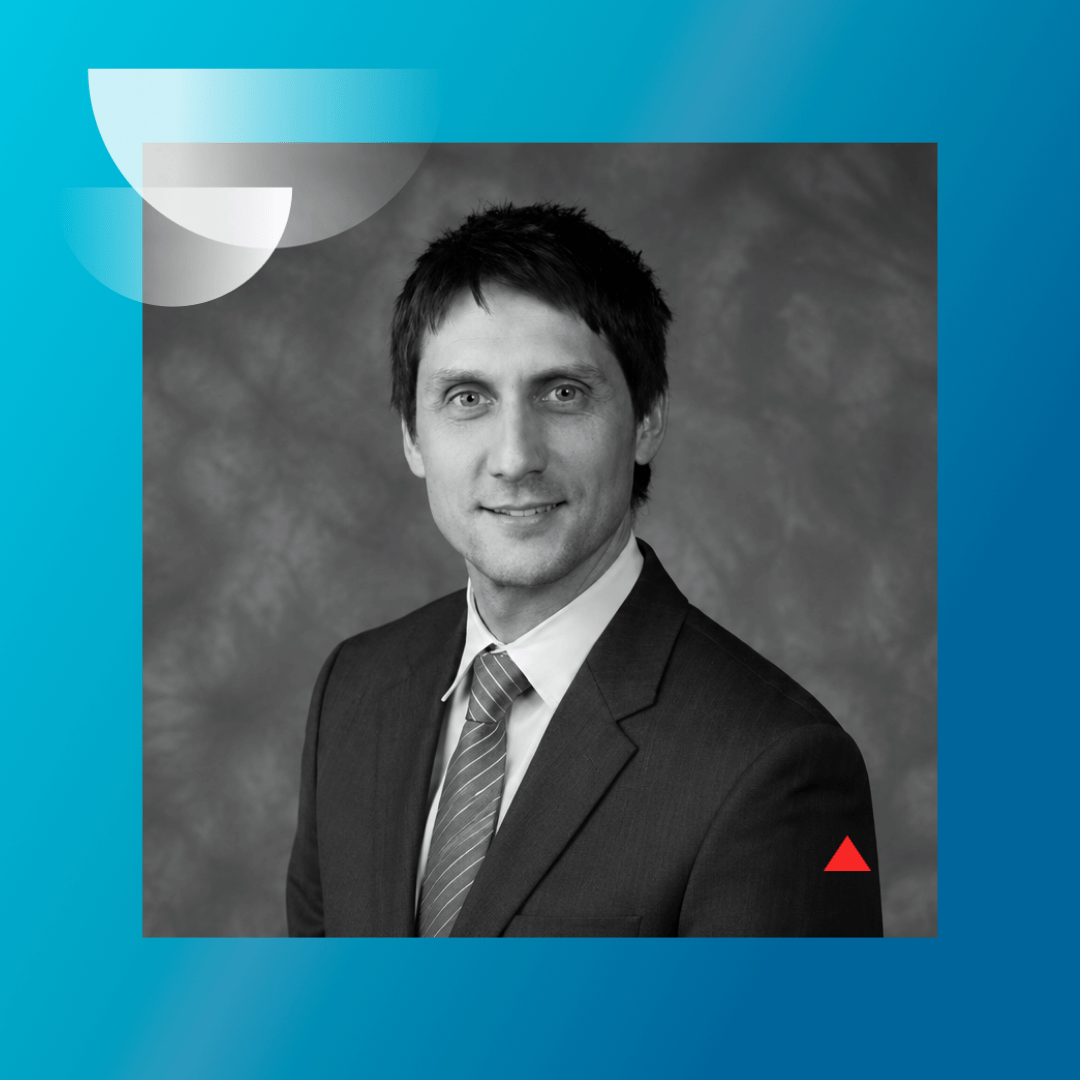
I'm Olivier Lafontaine, and this is Life Accelerated, the podcast for life insurance leaders focused on driving meaningful change through technology, process, and partnership. In this episode, I'm joined by Robi Krempus, Vice President, Global Head of AI at Manulife Wealth and Asset Management. Robi has helped build a framework that allows Manulife to move AI from early experimentation into real production, spanning governance, technology, and talent.
We'll explore how Robi and his team co-designs AI solutions directly with the business and how that partnership helped a new sales enablement tool support thousands of opportunities in Manulife's retirement business. We'll also discuss why it's so easy to build an AI prototype and so hard to get it in production, and where Robi sees wealth and asset management heading over for the next five years. Let's get into it. So good afternoon, Robi. How are you?
Robi Krempus:
I'm doing very well, Olivier, and thank you very much for having me on the podcast.
Olivier Lafontaine:
All right. So what we like to do on the show is usually start with something a little bit more personal and talk about things that have nothing to do with life insurance or technology. And so in our preparation, you mentioned there's a lot of soccer in your family. You're originally from Switzerland who did pretty good this year. So tell me a little bit about the FIFA World Cup. How do you feel about it and the results?
Robi Krempus:
Yeah, sure. So I think I grew up playing soccer in Switzerland. Obviously it's a huge sport there, and thoroughly enjoyed watching the World Cup. And I thought seeing Switzerland lose against Argentina was obviously tough, but they made it to the best qualifiers, which was tremendous. And seeing their reaction, Switzerland was awesome. And I really enjoy soccer. I went to one game, which was great. But even besides that, I really enjoy spending time with my family. I have two kids, and growing up in Switzerland, I've been always very connected to nature, to going outdoors. And I keep doing that here in Boston, in the US.
Olivier Lafontaine:
Amazing. Yeah, you probably did not completely follow the Canadian team. I'm a fan. I'm from Canada, so I followed the Canadian team. The first win ever, first time they got past the group round. So it was very exciting as well on our side. So it was a great tournament overall.
Robi Krempus:
And I've got to say, one of the most exciting games for me to watch was Switzerland against Canada. So I did really enjoy the games. I thought Canada played great.
Olivier Lafontaine:
Good stuff. Did you like the, I guess, American treatment to the tournament with the halftime shows and hydration breaks and all of that innovation in the game?
Robi Krempus:
Yeah, I guess the entertainment aspect of America has been incorporated and I thought I think the audience likes that. So I did think that it's sort of nice, have a halftime show or before the games, as I thought was overall really, really good World Cup.
Olivier Lafontaine:
Yeah, I agreed. Agreed. All right. So going back to our key topics and AI in particular, since that's what you do in your role. So tell me a little bit about what it means for you to lead AI for global wealth and asset management inside a big organization like Manulife. Where does your team spend most of its time? What sorts of projects are you doing?
Robi Krempus:
Yeah, sure. I'm happy to do so. First of all, what I will say, I mean, Manulife has a very structured AI function. I lead the global wealth and asset management business, but we also have leads in other segments, which is the LifeCo business in the US, Asia, and Canada. And I'm very well informed what happens outside our segment. And it's great to know to really understand the full picture and getting the perspective across Manulife. In terms of global wealth and asset management, you can break it down in three key processes. One is the investment manufacturing side of it. Manufacturing is manufacturing to asset management side, private markets and public markets. Distribution is intermediary business, retirement, wealth, and institutional. And we do so across Asia, Canada, and the US. And then obviously operation that is managing all aspects of operations. And when we do AI, we actually do AI in all those areas.
And when you think about the asset management side, it's mostly about can we actually impact investment performance? That's sort of like the north star, that's the goal. On the distribution side, we would like to impact growth. Can we grow the business integrating AI into the processes? And operations is mostly about efficiency. So we spend time in all those areas to really make sure that we apply AI very broadly across the organization. And in terms of what it is, the way we approach it in Manulife, it's like, first of all, running AI means really understanding the business. It's not just understanding what the difference between distribution operations, but understanding what are the nuances. For instance, intermediary in Hong Kong or retirement in Canada, what are the differences? Because when we then bring AI into understanding the business, we’re designing these solutions together with the business. And that's a very, very close partnership, and we call this co-designing solutions.
And I believe that's been the formula that's been the most successful.
Olivier Lafontaine:
That makes a lot of sense. And I've seen a couple of frameworks that companies put in place to try and measure the maturity of the business itself in order to be able to benefit from AI. Do you feel that that's a key component in terms of being able to be successful in AI? In other words, if the business side of things is struggling with basic data gaps or basic processes that are inefficient, it's going to be a little bit difficult. Would you not agree to enhance that with AI?
Robi Krempus:
Yeah, absolutely. I think establishing a robust measurement framework is at the core of AI, but also in general, anything data-related is instrumental to make AI work. When we look into the opportunities, so we have a robust business case discipline. So we have to estimate ROIs, we have to estimate the metrics, the KPIs, and then we measure against what we estimate and what we planned. So that's a really, really important component of it, and that's how AI has been run. You can't be data and AI if you don't have a data-driven approach. I think that's really a very core component of how we go about
Olivier Lafontaine:
It. I guess a couple years ago, the whole generative ChatGPT phenomenon started and took off and never slowed down since then. How did that affect you or how did you guys react when that came out? And what were the first things that you had to do to put the base in place to be able to take advantage of this technology?
Robi Krempus:
Yeah, and that was really interesting when ChatGPT 3.5 came out. And what happened in Manulife, GenAI was taken seriously really early. And that was instrumental for us to really jump on this opportunity, understanding what the impact of this could be. And the other thing the organization early on was thinking about, what is the path to production? We don't want to be in a world where we just experiment and test it out, but don't have actual commercial value to integrating AI into the businesses. And so what we've done, we ran actually pretty broad consulting engagement and had four components. Was governance, technology, business casing, and HR. But let me just walk you through those components. From the governance perspective, obviously an organization like Manulife already has really robust governance processes in place, model risk management because we've done data science and machine learning for a long time, information risk management, et cetera.
But what we did, we took that and expanded what is GenAI related. We looked at the model risk management and expanded it to GenAI. We also established Manulife's AI principles because we really wanted to govern and manage this in a way that is meaningful and that we want to publicly communicate outwards. In terms of technology, what we said was very specific technology partners that had the right to put AI solutions into production. So it's not just like that everybody could do that and that helped us being very clear what it means, what's the path to production. On the business casing discipline, that was as you expect, we kept the rigor that we already had in place. And from a people perspective, what was interesting, we broke it down in three components. Am I consumer of AI, producer, or am I a leader? And it's very simple, but really impactful because just if somebody just did some prompts, you're not a producer of AI.
It's still technology, it's still software, it's still data, it's a complicated space. So we've broken it up in a way and also making sure that from a leadership perspective, the leaders understood what AI is and how to drive that. So in a nutshell, that path to production was instrumental. And I remember even going to conferences if it was 18 months ago or two years ago, a lot of the topics were like, how can I move from experimentation to production? We felt like we got that right because we were able to productionalize solutions along the way.
Olivier Lafontaine:
That's amazing. It's still a big topic. There's still a lot of companies that are struggling with moving from experimental stage, POCs, pilots, all those kinds of things, and then pulling the trigger and say, yes, we're going to use this in production because we're going to get value and getting past the governance, security and compliance hurdles that are important. But a lot of companies are grappling with that. So is there something you can tell us about how leadership, you said getting the leaders to understand the technology governance in a company like Manulife. How did that go? Can you tell us a little bit some techniques or strategies you used to communicate and get people on board and get past the compliance hurdles?
Robi Krempus:
I think what was really fascinating about AI, and particularly thinking back at that time, is how incredible it's been in experiencing a well-working cross-functional team. So we had to make sure it wasn't just like a AI problem, AI opportunity. It was quickly understood that technology and AI and the data teams and the businesses had to come together and understand what this is. And I think that's what we worked out organizationally. We also got the external perspective on this to be like the way we look at this, think about this, does that align what experts see outside? And I think once we got to the alignment, and it wasn't like a committee that had to be approved across, I don't know, a hundred people. So it was a really capable, driven group that believed in it, made it happen, and did it in a responsible way. And I think that's the approach that Manulife took.
Olivier Lafontaine:
That makes sense. And if we talked a little bit more in our preparation before you told me, I think you worked on, there's lots of projects that were done, but one of the projects that piqued my curiosity a little bit is around creating better advisor tools and better customer experiences. So can you tell us a little bit about what types of problems your representatives, your sales team was struggling with that you addressed with the technology?
Robi Krempus:
Yeah, absolutely. So we actually built a portfolio for what we call sales enablement AI solutions. And we've done that across in the US, in the intermediary business, in the Canada wealth business, as well as in US retirement. And I think the first one that we built was in US retirement, and I can talk a little bit about that more. Because what the sales organization is often dealing with is fragmented information. So you've data and documents spread across system, across files, across emails, et cetera. And they have to process a lot of information in their own preparation before they go see a client, before they see an advisor, before they see a prospect. We already did quite a bit of work when we did machine learning work, data work in the distribution organization. But I think adding AI to that was incredible because you now had the ability to swift through all this information in a way where you can find quicker answers, where you can draft emails, when you can prepare for meetings.
And I think the previous investment in data and data-driven approaches and integrating AI into that has been really beneficial in creating that one-stop shop for the sales organization made a difference. Also to mention what I said initially, all these solutions have been co-designed by the sales organization. It's not that we came like, "Oh, we believe that's the tool you need." So it's sitting down, designing, testing, piloting, and productionalizing. It's all been a super close collaboration with the business.
Olivier Lafontaine:
That's great. And is this something that you developed internally or a mixed of vendors without necessarily naming vendors, but is it a mix of vendors that help you out to use the out-of-the-box package? How did you approach the build portion of this?
Robi Krempus:
I think the build portion, so obviously we are big organizations, so we have big vendors that sort of like a CRM vendor and a marketing vendor. They manage data, they manage processes. So that's one aspect. And the second aspect is from the large language model, so you can name the usual suspects. So we have the ability to tap into the latest large language model, which is incredible. But in terms of building the solution, so that was done in-house. So we didn't procure a vendor for a certain component of that sales enablement platform was actually us building it. And once we built the platform, we now also have the ability to expand it into other areas of processes. So it gives us the flexibility to tackle and expand that role and depend based on continuously meeting the needs of the sales organization.
Olivier Lafontaine:
Yeah, that makes sense. And I think you have a decent size, you have the chance of being at a company that can afford to have a good team of developers and analysts and all of the engineers that are required. So can you tell me a little bit about the types of skills in your team that help in making this a reality?
Robi Krempus:
Yeah, sure. I think so when you look at the platform like that, that's like an end-to-end solution when you think about break it down into your data component, your AI and your application, as well as the infrastructure that supports it all. I think talking back to the cross-functional team, it's not just integrating the business to that, but we created these cross-functional teams across data AI, application, and infrastructure, and making sure that the system works end-to-end. And it obviously is a lot of data work, creating data products. The AI component, particularly the GenAI, we had to work out and test out and go with the developments and then integrate into the application. So I think it's been a really broadly nice coming together from a technological enablement team as well as working with the business to make that happen.
Olivier Lafontaine:
I know the answer to this, but did you encounter a little bit of resistance from the team? I'm assuming it was not so bad since the sales team participated as you describe in the process, but still, how did adoption go? What are some of the outcomes of this in terms of deploying and getting the sales force to use it?
Robi Krempus:
Yeah, so I think, and that comes back to the partnership, because when I think about traditional technology teams, how it's been like the business gives requirements, the tech team does something, and then you go back, I built this, and then the business is like, "Ah, I don't really like this. Can you change?" So it's a lot of back and forth and a lot of documentation about it. So when you think about the deployment of a solution like that, as you would expect, you have power users, people are in that's like, love it, do it, test it and stuff. And then you have a group that initially is more resistance and they just have to see how it goes, understand, start to use it. But the mechanics of increasing the adoption of this was managed by the sales organization by very strong support from the global head of retirement.
That was not seen as our responsibility. We are obviously the AI enablement team, but having that partnership and having sure that the power users are sharing success stories with the ones that are more resistant, that structure really, really helped. And I think that's what was the path to success. In the end, we are doing this to be successful, to have a differentiation, to get information faster, higher quality information. It's got to be value-add to the sales organization, otherwise it wouldn't make sense. And I think we just had to make sure that that was seen as a fact.
Olivier Lafontaine:
And I guess at some point, even there might be resistance at first, but did you find that after some time, then it becomes almost people get almost pressured to use it because it gets exciting?
There's more and more people telling their stories, and so people don't want to be left behind, I guess, to a certain degree, and not using AI. Did you see a little bit of that as well? A desire to take advantage on the technology just because there's a point where you realize, if I don't do this, then I'm going to be a dinosaur soon enough.
Robi Krempus:
I don't want to sugarcoat it, but I would say the adoption has been actually very solid and we haven't seen huge resistance in general. The one thing I will tell about the sales organization, I mean, they're extremely resourceful and they'll use it if it makes sense. In some case, it's going to take a little bit longer until I use it, but if it doesn't make sense, they're not going to use it. And I think seeing that adoption and also excitement and sharing the success stories has been actually natural. And I think that comes back to what we talked initially about leaders with an AI-first mindset. You need to tackle that from many, many aspects. And having all those leadership aspect, building the right tool, having the partnership, seeing success, sharing success stories all together made it work out really nicely.
Olivier Lafontaine:
And maybe if we shift, has there been customers that have realized that this was going on? Or did you use some strategies to make sure it didn't sound generic and AI-like? Or how did you approach that? That's a pretty sensitive aspect of it if you're generating text. So can you tell us a little bit
Robi Krempus:
About that? Yes, absolutely. So I think to be specific, what the tool allows you to do is create personalized information. Because when you look at all the data, so we have the data organized by all the activities, all the transaction industry data. So it gives you that personal description, but all that information come from compliant approved sources. And also, this is an output that the sales organization receives that doesn't mean that they just take it and blast it to everybody, copy, paste, and send it to everyone. So they still have the opportunity to customize to their needs and send out the email. And what I would like to say is this is not an automated client communication tool, but it's about this personalized experience. But when I think about more like thought leadership and automated client communication, more in a systematic and in a broad way, that's something we are exploring, that we are thinking about doing a little bit beyond just the line of business.
But this tool specifically is meant for personalization.
Olivier Lafontaine:
Good. And have you been able to measure, I know it's always hard, but have you been able to measure progress or some success or some value directly associated to the AI part of the tool?
Robi Krempus:
So what we do, we actually, to do, as we discussed previously, to do AI right, you have to have a really robust data measurement system in place. And we do have that so we can understand how did the activity start?
Where did the leak come from? How long did it take to close the business? So we have all that data. So we actually start to see deals closing that started in the application closing there. And tracking that, tracking that activity is super helpful because it allows us to customize, to fine-tune, to learn from it. And we've seen that. So we had a public announcement, I believe in May, and I think we communicated about 2000 opportunities have been started and went through the application. And because the application is built, so we obviously expect the number to grow. So it's really, really good to see that it's not guessing.
So we really see actually fact-based results that come out of this AI application.
Olivier Lafontaine:
Wow, that's amazing. Congratulations for that. It's not always obvious to get some measurable progress. Really impressive what you guys did. And I've had the chance to work in the past as a vendor with different labs at Manulife, so I know there's a lot of energy that's being put into those things. So it's great to see some results. It's good for the industry. Actually, if you were able to go back in time a little bit, is there something you would do differently or some lessons that you've learned over time that you could share with us?
Robi Krempus:
Sure. So I think still when I go back to when ChatGPT first came out and when we got access and the approach we took, and even if you think about now, what is absolutely incredible when you write a prompt and if that's like you can prompt and write an essay, you can write a prompt and create a video, you can write a prompt, and you can wipe coat and create an application or whatever it is. So it's so easy. And I think when you think about the way how you would structure business casing, it's like the value and complexity. And I think when it appears so easy, it's a little bit misleading. And I think there's a quote about AI that says it's so easy to build a prototype, but it's so hard to productionalize. And I think when we started, in some cases, we went tackling some of very complicated use cases and we learned our lesson because it's still engineering, still a lot of data work, it's still a lot of infrastructure, it's still application.
So obviously AI gives you tremendous power and tool to solve certain things, but certain other things are still very complicated. And I think getting that balance right from value starting with lower complexity and then increasing the complexity over time. And I think that's the approach that we eventually took because initially we productionalized less complicated solution where we believed had big impact and then started to tackling more complicated use cases. Sort of like that's when I go back and I was like, wow, is it that simple? And going through the rigor of productionalization, I think that's one of the learnings when I look back.
Olivier Lafontaine:
Yeah, it's almost like there's a map or a heat map of the use cases that are simpler, but very high volume. Those are where you get the best bank for your buck and energy and gets everyone on board, right? Yeah. That's so true. But I agree, and that's well put that this is technology that is so easy to use. And anyone, it's misleadingly simple because anyone can go 90% of the way. Exactly. But getting the last 10% is extremely complicated and you actually need your best engineers for that even more so than in the traditional world. So it's an interesting. And people have a hard time. Did you face that by the way, where you have some solutions perhaps are 90% of the way there and it feels like it's just missing the last 10%? And then there's a bit of stress around that where why did it take only so little time to get to the first part and so much time for the last part?
Did you face that at all?
Robi Krempus:
I did, but interestingly, in some case, the horror part was not necessarily AI. It was still certain aspects that had to be solved. It was data related or application related. And I'm talking back pre the big change that Anthropic brought in with autonomous coding in end of last year. So this is the early days. And I do think in some cases closing that last 10% as you name it would've been a huge effort. But where we've been actually quite ruthless is saying, "Well, let's stop. If this is not going to work, let's stop. Let's go over here." Because when we initially looked at the opportunities, there were just so many opportunities. When you think about the value against complexity spectrum, there's just so many opportunities. And then we said, okay, not the time we can revisit it, but let's tackle where we see the value complexity or relationship being more optimal than tackling some very complicated cases.
Olivier Lafontaine:
That makes a lot of sense. And if we switch the view to the future as closing words, I suppose, what do you think the wealth and asset management business looks like in five years considering everything that's happened in the last couple of years and what's still accelerating today? What do you see are some major changes that people can look forward to?
Robi Krempus:
Yeah, sure. I think AI in five years almost in some way feels like eternity. Just seeing at the pace of change, things are happening. But let me just get back Back to the three key processes that we talked about initially. Where I see an opportunity more on the asset management side is when you think about the asset management world, so we compete against some of the biggest financial service companies, that's JP Morgan, that's Fidelity, that's Vanguard, but that's also can be hedge funds. And what as an example, hedge funds done really, really well is custom technology solutions. And I think they typically didn't just procure a lot of the vendors and just lift in the systems of the vendors. They built that solution to get information faster or get high quality information. With autonomous coding, I do see a good opportunity to think about how can we build custom solution for our asset management business?
And that's something we are exploring. On the distribution side, we've learning a lot working with the sales organization, distribution organization, but we also think about how will AI change customer relationship? How will AI change advice? How will AI change wealth advice, financial planning, investment advice? And what will that look like? Will we see, and we start to see vendor popping up that have those capabilities. And we also is an area that we exploring and thinking about how will the interaction with the client change in the relation to AI that's beyond the current operating model. And lastly, on the operations side, automation has always been the main topic in operations. And I think that's where particularly agentic structures come into place and where you have a lot of simpler processes connected together. I think we will see a lot of ability to automate much more where we are and reduce cost in such way.
But lastly, what I will say is what's actually really interesting is the interplay of SaaS organization and build custom solution in-house. And I saw some stats that show we moved to 70, 80% of currently financial service organization use SaaS solutions. And I think that balance will change where we'll see more custom-built solution in our organization. But at the same time, SaaS solution's not going to stand still. So they might change their operating model, think about different ways, be more dynamic, have more different types of custom solutions. So it's going to be really interesting to see how that was going to play out between technology company using autonomous coding as well as big organization like us using autonomous coding. And so I'm actually super excited to see how that's going to play out. I
Olivier Lafontaine:
Agree. Thank you very much. This was very insightful. Thank you for spending some time with us, Robi. And I guess we'll wish you good luck in your projects, and we hope to have you on the podcast in the future as well.
Robi Krempus:
Olivia, thanks so much for having me. It's been an absolute pleasure having this conversation.
Olivier Lafontaine:
Robi's experience is a reminder that AI's biggest returns come from discipline, not just experimentation. What stood out to me most was the emphasis on co-designing every solution with the business instead of building in isolation. It's a reminder that the hardest part of AI isn't getting the first 90% of the way there. It's closing that last 10% to get value. As more organizations look to move AI use from pilot to production, Manulife's approach shows that clear governance, strong data, and close partnership with the business are what separate lasting impact from a passing experiment. Thank you so much for listening.