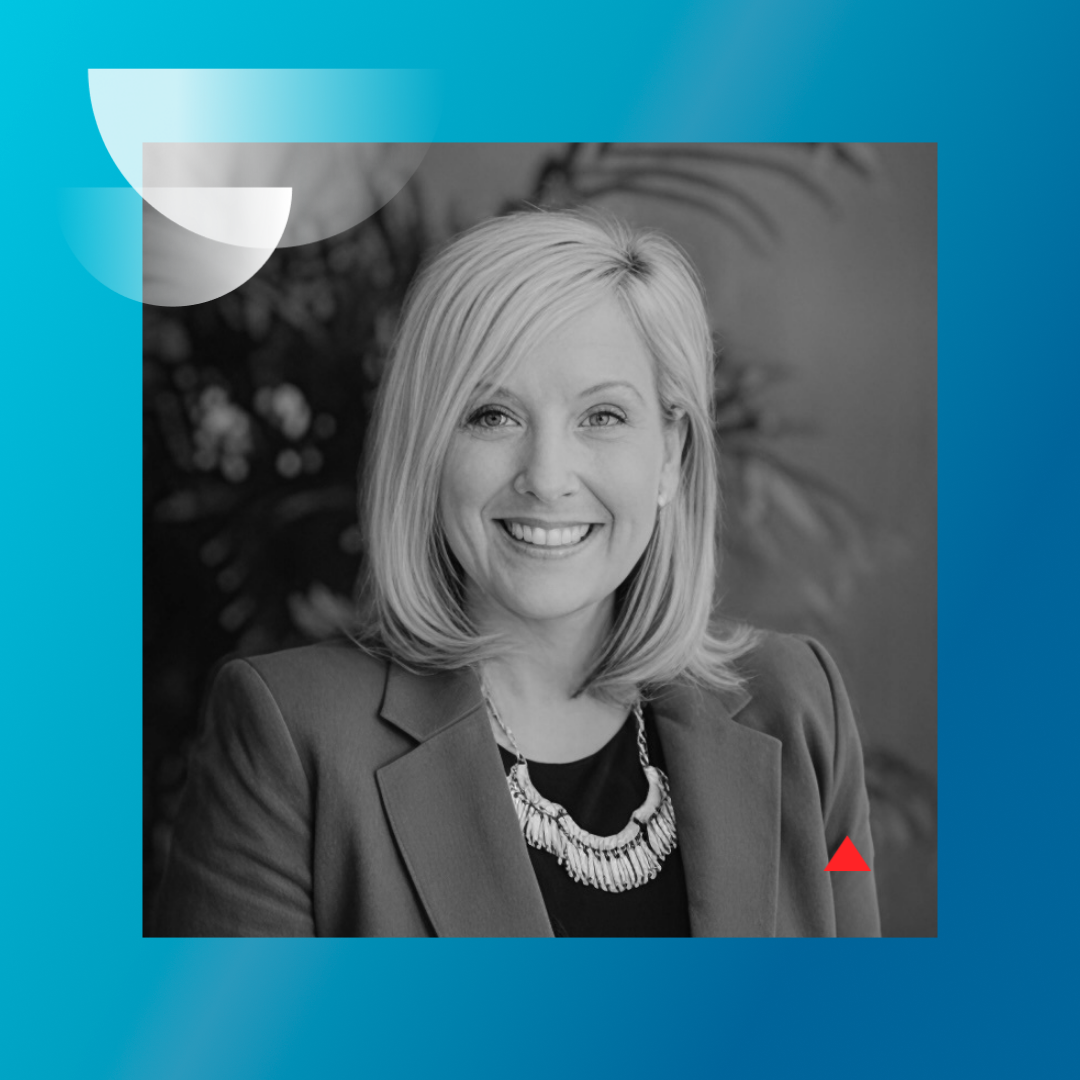
Emily LeMay:
Don't skimp on the storytelling. I mean, really setting that vision, making sure the tone is permeating from all of the leadership and there's alignment, but that everybody has sort of the same messaging and the same vision and you're really willing to and able and ready to share it all the time.
Olivier Lafontaine:
Let's start with a little bit about yourself. What I like to do on the show is to sort of get something a bit more personal about what you do outside of work, and I think from our preparation, you talked about your love for food and your cooking on your off time. So can you talk about that a little bit to start with?
Emily LeMay:
Absolutely. Nice to see you, Olivier. Yes. I would say it's not even a love, it's a bit of an obsession. So I am obsessed with food and eating and cooking and all things sort of related to that. My husband and I travel often just for food. We will pick out restaurants and we'll travel the world just to go eat at those places and really that's where my passion for cooking started. I loved eating at great restaurants and then I wanted to come home and figure out how to create those dishes myself. That really developed into a passion. It's definitely a great stress reliever and it's delicious too.
Olivier Lafontaine:
Love it. I love to cook myself. I'm actually subscribed to a service that will deliver all these weird products, so I have received the Wasabi Micro PO recently, so it forces you to google some recipes, so it's really interesting. So yeah, very good way to think about something else than insurance once in a while.
Emily LeMay:
Absolutely.
Olivier Lafontaine:
Alright, so for those who may not be familiar with Global Atlantic, can you start by giving us a little bit of an overview on what products you guys focus on and what sort of makes the company unique on the market?
Emily LeMay:
Yeah, absolutely. Happy to. So Global Atlantic has been around for a little more than a decade, so still kind of young in terms of some insurance companies that we compete with in the marketplace. We really have two kind of core businesses. We have an institutional reinsurance business that has built decades of really strong relationships with clients. And then we have an individual markets business or more traditionally thought of as a retail business. That's the business that I co-lead. And in that business we focus on annuity products and life products. We have sort of two main sleeves. We play primarily in the fixed annuity market and we're perennial top five writer of fixed annuities in the industry. And then we have a business which is a pre-me insurance business, which effectively is insurance policies to fund funerals, and we are number one in that industry. It's a much smaller by scale from an annuity perspective, but we're really proud of that. So those are our main focus areas.
Olivier Lafontaine:
Awesome. And I guess you mentioned that you've been in this industry for 25 years across technology and also operations. So how did you come to be the co-head of retail markets or individual markets? I think they're the same thing, right?
Emily LeMay:
Yeah, it's a great question and has a very nonlinear answer. So I actually happened into the insurance business by starting a job at MetLife 25 years ago in the contact centre. And I thought that I would stay there for a couple of months. I didn't really think I was going to make a career in insurance, but I ended up really loving it and having a passion for our customers and really developing a passion not only for them but for the people that sat around me. And one of the things that was impressed upon me really, really early was in a lot of ways our products can be complex to understand and complex to buy and own. And so we were having to field a lot of different types of questions at any given time. And so from a client perspective, I had empathy for that, really understanding what you bought and the value of it.
And at the same time as a context centre rep, the technology available to me at the time was really limited. And so we had to navigate in some cases 25 different screens to answer a single question. And so that really ignited a fuel that's carried me all the way through today, which is how do we really make these products easier to buy, sell, and own for our clients who need them because they have tremendous value and at the same time, how do we develop and scale our technology in a way that makes it easier for our employees to service those customers and provide those answers and have more quality in their jobs? And so that led to a very differentiated journey. As you said, I've had a number of roles in technology and business automation as well as leading major transformations and from an operational perspective, and that all led me here to now leading the retail business and bringing all of those things together, which has been really fun.
Olivier Lafontaine:
Yeah, I can imagine that would be really advantageous in your role to have seen all areas of the business, being able to tell the view of the customer a little bit, what the IT folks are going through and so on and so forth, right,
Emily LeMay:
Absolutely. I had a leader very early on in my journey that I was fortunate, gave me a great piece of advice when I was debating sort of whether to take a role in my chain of command, my current chain of command. And he asked me, do you want to lead a contact centre? Do you want to be a leader of the business? And I thought about that for a second, but I said, well, I want to be a leader of the business. He goes, well then you need to know as much about the company as possible. And that really led me to this path of saying, okay, I'm going to go try these new things because it's all an attempt and a way to understand how the company operates and to make me a better and stronger leader. And that's certainly proven to be true.
Olivier Lafontaine:
So if we talk more a bit more strategically, say over the past five years, I think you guys have gone through a major transformation and you talked about you yourself doing transformations before, but in particular in the last couple of years at Global Atlantic including policy administration. Can you walk us through what drove the decision? I mean, these are difficult projects and career defining projects I will even say. So can you walk us through a little bit what that looked like and why go through that in the first place? Why suffer that?
Emily LeMay:
So I've been at Global Atlantic for nine years. This journey to transformation actually really started nine years ago. So when I joined the firm, we were a firm that grew up as an acquisitions business. So we'd acquired other businesses over time. We'd never fully integrated those technology platforms or even processes. And so all of our lines of business operated on a different set of tech with a different set of processes. And I said to our CEO at the time, I said, look, if you want this business to scale and grow the way that you're saying that you do, we can't do it in this sort of dispersed way. You really need to have some synergy. We've got to create scalability in the model. At the same time, we were struggling with some customer servicing and some challenges where we were delivering experience that we didn't like.
And so we spent many years actually researching and really working through the idea of could we transform this and should we implement a new policy admin system? And we came to the conclusion that absolutely one, yes we should, but at the same time, it wasn't the technology alone that was going to deliver the experience that we needed. We really needed to transform our operating model. We needed to transform the way we thought as a company, we needed to transform the way we did product development. And so it really was a complete transformation of our business that we set out to sort of do. So it was a complex thing, a lot of board approvals, many sort of years of working through that decision. But then I'm proud to say once that kicked off, we were really able to transform the business in pretty record time from end to end. It took us really less than two and a half years to complete all of those efforts. So that's certainly something I'm really proud of.
Olivier Lafontaine:
Certainly just surviving a project like this is already a huge achievement because not every leader in every company goes through this successfully. So congratulations on that. One question I always have is did you feel the business, I mean so accurate that you're saying this requires a business transformation as well, it's not just a technology project. Would you say the people in business aspect of the transformation was more complicated than the technology or how would you characterize those two aspects of the transformation?
Emily LeMay:
People are always more complicated than technology, I think Olivia, right? But yes, I would say the organizational change was difficult. One in the sense that we really had to know what we didn't know, and you had to dive into all of these capabilities and individuals sets of work to understand it, to effectively transform it. And so that in and of itself was difficult and time consuming and very detailed. And then at the same time, there is the human aspect of change resistance and this idea of this is my job and I'm proud of my job and I've done my job I think in a good way for a long period of time, and now you're asking me to change it. And so that I think was the harder part to deal with certainly. And we spent a lot of time storytelling and really spending time with individuals, with teams, casting the vision, getting people excited about the vision. And then I was certainly not shy in consistently reinforcing why are we doing this? Where are we going? How is this going to be better for you and how is it going to be better for our clients? But that was a constant drum beat throughout our entire transformation,
Olivier Lafontaine:
Had a good nugget of advice there. And did you use any, without necessarily naming them, but did you use external consulting firms to help with the organizational change management? Yeah. Did you find that useful?
Emily LeMay:
Yes, we had a great partner. One of the things that we knew early on in this transformation was we run a lean organization. We always have run a lean organization that's part of the DNA of our company. But as a result, number one, we were just going to need extra hands to help us do this in the amount of time that we needed to. And number two, I will fully admit, I don't know what I don't know. And so we felt like it would be helpful to have people who could source expertise for different parts of this transformation, and that was definitely the case and was incredibly valuable to us.
Olivier Lafontaine:
Sounds good. So you were talking about the transformation, the organizational change management and you having the wisdom of working with other people that know about stuff. So I think that's great advice. So would you say that the transformation is completed now? How would you say, where are you in this journey at this bar? Are you done? Are you in the middle of it? Are you towards the end of it? What would you say?
Emily LeMay:
I think deciding when you're at the end is one of the hardest things that you encounter in a transformation because inevitably there's always loose ends. And I think when you tackle anything that is of this magnitude of this scale and takes this long, the world continues to change around you, new technologies become available, new sort of service expectations are being built every single day with our clients. And so to come back to the answer, we set a very sort of definitive set of goals that determined when transformation was complete and when we were going to call it complete. And so as we sit here today, yes, we completed those. I think what was sort of the next journey for me as I became COO following the transformation completion was reinforcing this idea that evolving to the expectations of your clients, whether that be from an operating model perspective or a technology perspective, is a job that's never done. It was really incumbent upon us to build that continuous change into our DNA into our new DNA and to really then start to leverage this springboard that we got by creating all of this great foundational technical capability and in our operating ecosystem. And so that's where we are now. We're continuously evolving and we're continuing to add new capabilities and new technologies that we think are cool and scalable and will achieve the client experience that we're looking for.
Olivier Lafontaine:
Yeah, I guess you get to a place where you have continuous improvement going on, but then the main project, I suppose is considered completed the bulk of the risky aspect of it, which is the big transformation past that. But now you have a new platform to evolve, right?
Emily LeMay:
Yep, exactly.
Olivier Lafontaine:
Thinking about the technology ecosystem and around adding those capabilities through APIs and partnerships, can you talk a little bit about some of the opportunities that you're looking at either that you've done recently or that you're looking to do in the near future
Emily LeMay:
Future? Yeah, happy to do that. Look, I think one of the decisions we made inside of our transformation and we've held true to was the idea that there's a core ecosystem that really becomes the heart and lungs of your operating ecosystem. And that heart and lungs while sort of static and standard, has to be modern and kept up to date enough so that you can plug in those additional technologies around that ecosystem as you want to drive that experience. So we tend to be sort of light when it comes to how much we're building into our policy admin system, and we focus more on how can we then use partner technologies to achieve that experience. One of the journeys we're on right now that is really exciting for us is deploying some AI and intelligent automation capabilities. As I talked about kind of my origin story from an industry standpoint, we continue to need to make it easier to buy, sell, and own particularly annuities.
And right now they're still very, very paper-based. Even the way that businesses submitted electronically, it still doesn't automatically lend itself to kind of like an end to end digital experience. And so what we're actually doing is we're manufacturing that on the backend. So how a client submits that business to us, we are actually using AI and using intelligent automation to create that straight through experience. And when we're done, we'll be able to issue business basically with a click of a button. We'll be one of the only ones in the industry that are able to say that. So that's one of our big opportunities that we're tackling right now.
Olivier Lafontaine:
Are you doing something around data analytics and trying to get some insights into the process like that? Because oftentimes not everyone's able to do that, but when you move to a new system that gives you a lot more data, it gives you more easy to analyze data, put them into some new platforms for analytics. Have you guys been able to look into that a little bit or is that on the radar?
Emily LeMay:
We have, and I think one of the advantages of sitting in the seat that I now sit in and having ownership of product development and sales, but also having an operations background is that I inherently know that there is an incredible amount of valuable data that's coming through the policy admin system that we are not always harnessing. We think about sales or we think about product development. And so what we're able to do in a limited way now, but once we get through the deployment of some of these additional capabilities is we'll be able to take all of that data and analyze the demographics of it. We'll be able to know inherently where do our products sell the best in terms of geographic location. We already are dialed into kind of our target demographic in terms of age and gender, but we'll be able to reinforce that with the actual policy data.
And so that will help us make sort of better sales decisions. It will also help us think about better product decisions. We'll be able to analyze what are the transactions that are happening and how are clients engaging with us and what does that tell us about then the types of products or features that they may want next or want available to them. And so we're really going to be harnessing that data and kind of pulling it through the whole system to think about that end-to-end experience from what do clients want all the way through to what kind of experience do they want once they've purchased one of our products.
Olivier Lafontaine:
Great. That's awesome. And then so you mentioned, I think in our preparation that you do some work with the Insured Retirement Institute and trying to tackle some of the industry problems. Can you talk a little bit about that and how does that feed into your strategy or your thoughts around how the industry can improve around paper processes, around improving data and things like that?
Emily LeMay:
Yeah, absolutely. So I'm on the board of IRI and IR i's whole goal is kind of coming back to what I said, it's to make annuities easier to buy, sell, and own for clients. And one of the big initiatives that we've been championing over the last couple of years is this digital first initiative and what it effectively is a call to all of our carrier and distributor community to really push the digital envelope. The way that we're doing that, and one of the challenges to doing digital business historically has been all of our data looks different. If you think about fields inside of the administrative system at Global Atlantic, we may call a field one thing. A competitor may call a field something else and a distributor may call it a third thing. Well, that makes it really difficult then to share data in an easy digital way.
And so we've really done two things as a group. We have coalesced, so to speak, around a set of data standards and a set of data permutations that are central to being able to conduct business digitally. And we've got scale in terms of that acceptance. Then the next thing that we're doing is we're actually working as individual carriers and distributors to build out digital APIs so that we can connect to one another biggest. One of the biggest sort of APIs that we've done recently or that has started to get traction recently is something that we call carrier to carrier exchanges. What that basically does is it allows companies who have this API to connect to one another, and so as we see money moving across the industry from us to our competitors or vice versa, it enables us to do that now digitally versus doing it through a more manual paper-based way. And so from a client experience standpoint, what that means is that's taking that process from something like 30 days down to one to two, so it's a much more rapid pace and it's just a much more modern way to operate. And so we're continuing to work on those types of initiatives as an industry community.
Olivier Lafontaine:
And how do you see adoption around that? Is that a challenge? Are companies willing and excited about moving forward with some of those new standards? How would you characterize that?
Emily LeMay:
Yeah, I think three years ago if we were having this conversation, I would've said adoption is a challenge. I think in the last 18 to 24 months, we've had a great community of carriers and distributors coming together really saying, this is important for all of us. This is the future and we need to do it. And we've seen organizations prioritizing these things above internal initiatives, which is always the challenge. I think a year from now if we have this conversation again, I think we'll see a lot of success stories as companies continue to go on that journey of building these into their technology roadmap.
Olivier Lafontaine:
Awesome. You gave us already some good advice. Any other advice you want to give based on your experience in going through this transformation journey and now emerging and seeing what we might call the post transformation investments? Any other advice that you would want to give to the audience?
Emily LeMay:
I think first just be prepared for things to go wrong and your posture and how you work through and navigate those challenges is incredibly important, not just from a leadership decision-making perspective, but to how the organization perceives what's happening. That whole tone comes from the top and so early on just having a point of view around we know things are going to go wrong, and even preparing for what's your posture going to be as you work through it, I think is really important. I think the second thing is a phrase everybody's familiar with, but perfect is the enemy of good, especially in terms of a transformation. Again, there's always going to be loose ends. There's always going to be things that you could and should do, but if you focus on trying to make everything perfect, you're never going to achieve any of your goals and the world's going to pass by and it's going to make your journey a lot longer and a lot more challenging. And then I think the third thing, which I already mentioned a little bit, but is don't skimp on the storytelling. I mean, really setting that vision, making sure the tone is permeating from all of the leadership and there's alignment, but that everybody has sort of the same messaging and the same vision, and you're really willing to and able and ready to share it all the time. I think those would be my three big pieces of advice.
Olivier Lafontaine:
And I guess they're also related, right? Because if you set the tone, if set the vision, then you're not going to sweat as much when the problems arise. You can focus on the big picture of what we're trying to accomplish, rather than small details that might not be in the transformation in the end. Right.
Emily LeMay:
That's exactly right.
Olivier Lafontaine:
Emily, thank you very much for your time. Really appreciated the conversation, and again, thank you for your time and all of this advice for the people attending the show.